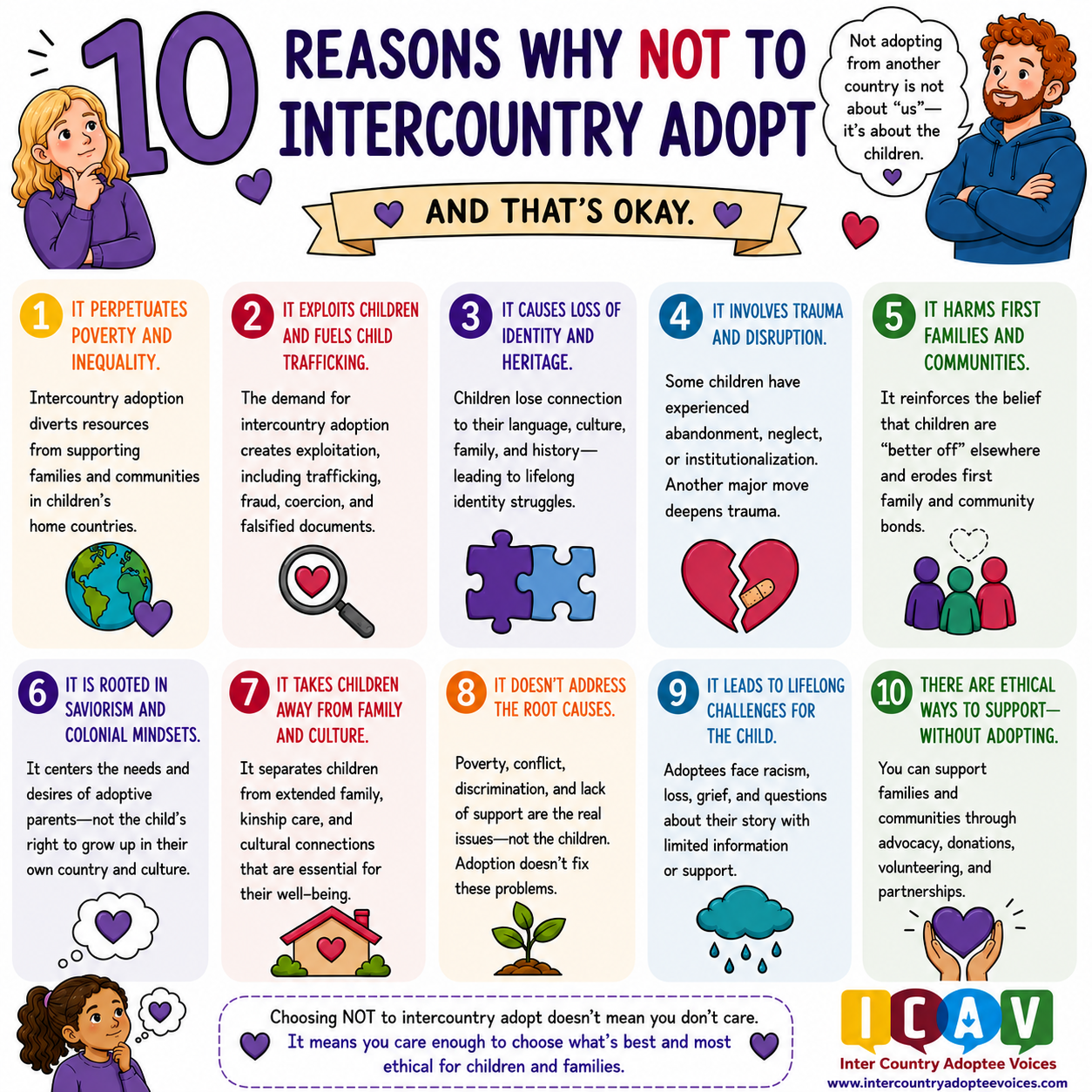
Why We Created 10 Reasons Not to Intercountry Adopt
For decades, intercountry adoption has largely been presented through the lens of rescue, family-building and giving a child a better life. Far less attention has been given to what is lost when a child is permanently separated from their family, culture, language, country and identity – or to the structural inequalities that make intercountry adoption possible in the first place.
At ICAV, we believe these realities need to be part of the conversation.
This resource was created to challenge the assumption that intercountry adoption is automatically in a child’s best interests and to encourage people to look beyond the desire to adopt. Poverty, discrimination, conflict and lack of family support should not become reasons for children to lose their families and countries. Wherever possible, resources should first be directed towards helping children remain safely within their families, kinship networks and communities.
It also reflects what intercountry adoptees have been saying for decades: adoption does not erase the impacts of separation, loss, racism, displacement and disconnection from identity and culture. These experiences can remain with us throughout our lives.
We are not asking people to care less about children.
We are asking them to think differently about what caring for children means.
Sometimes the most ethical response is not to adopt, but to support families and communities so that children do not need to be separated from them in the first place.
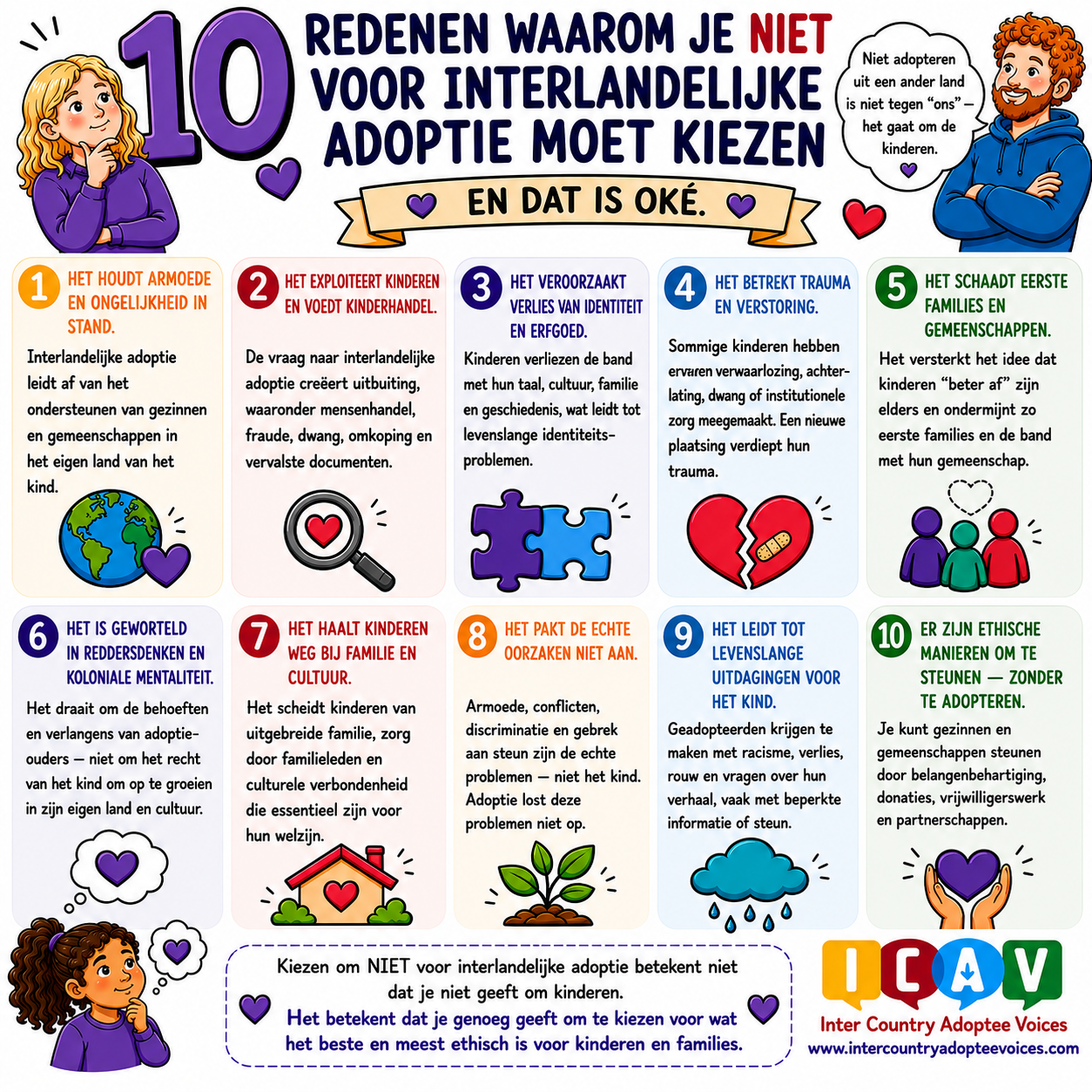
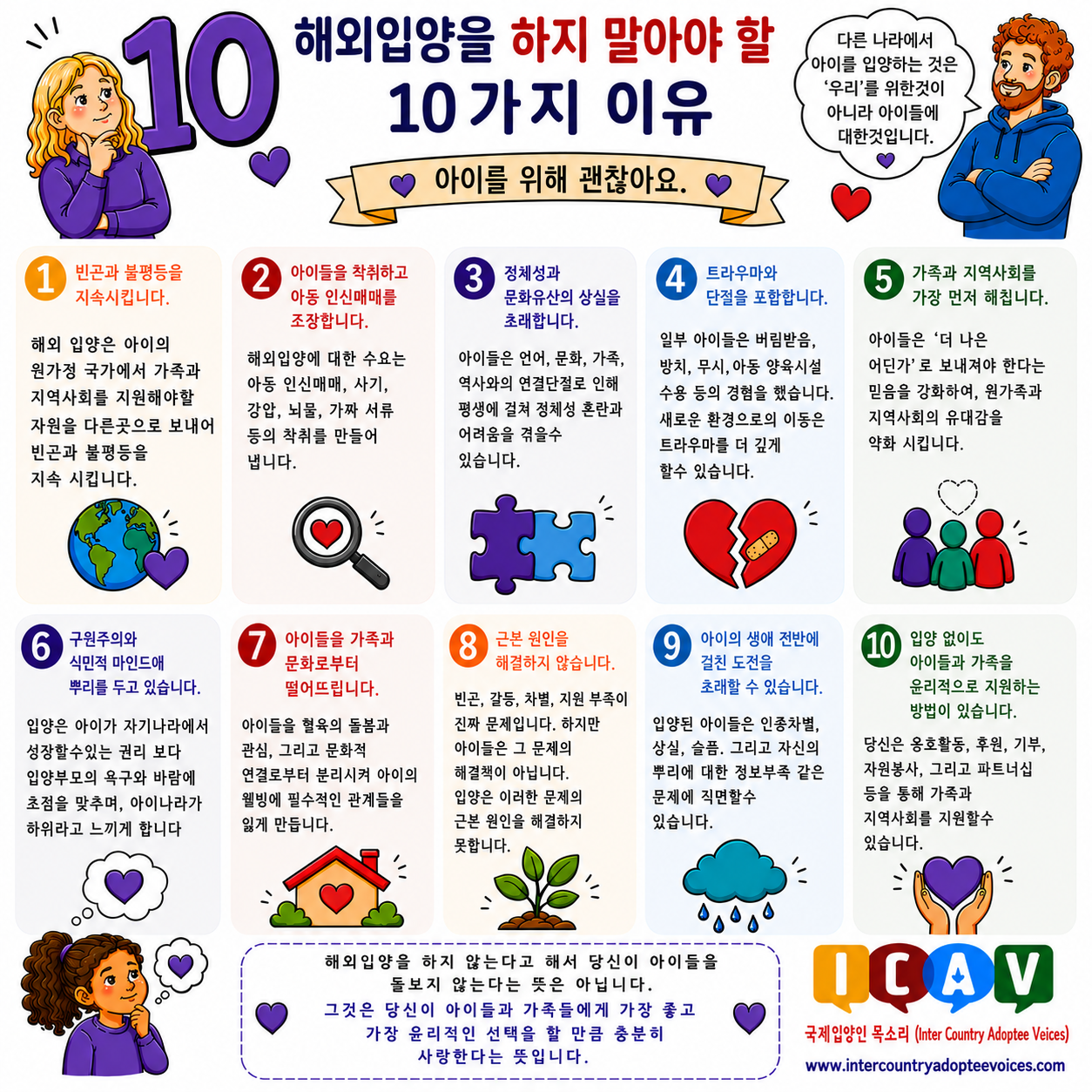
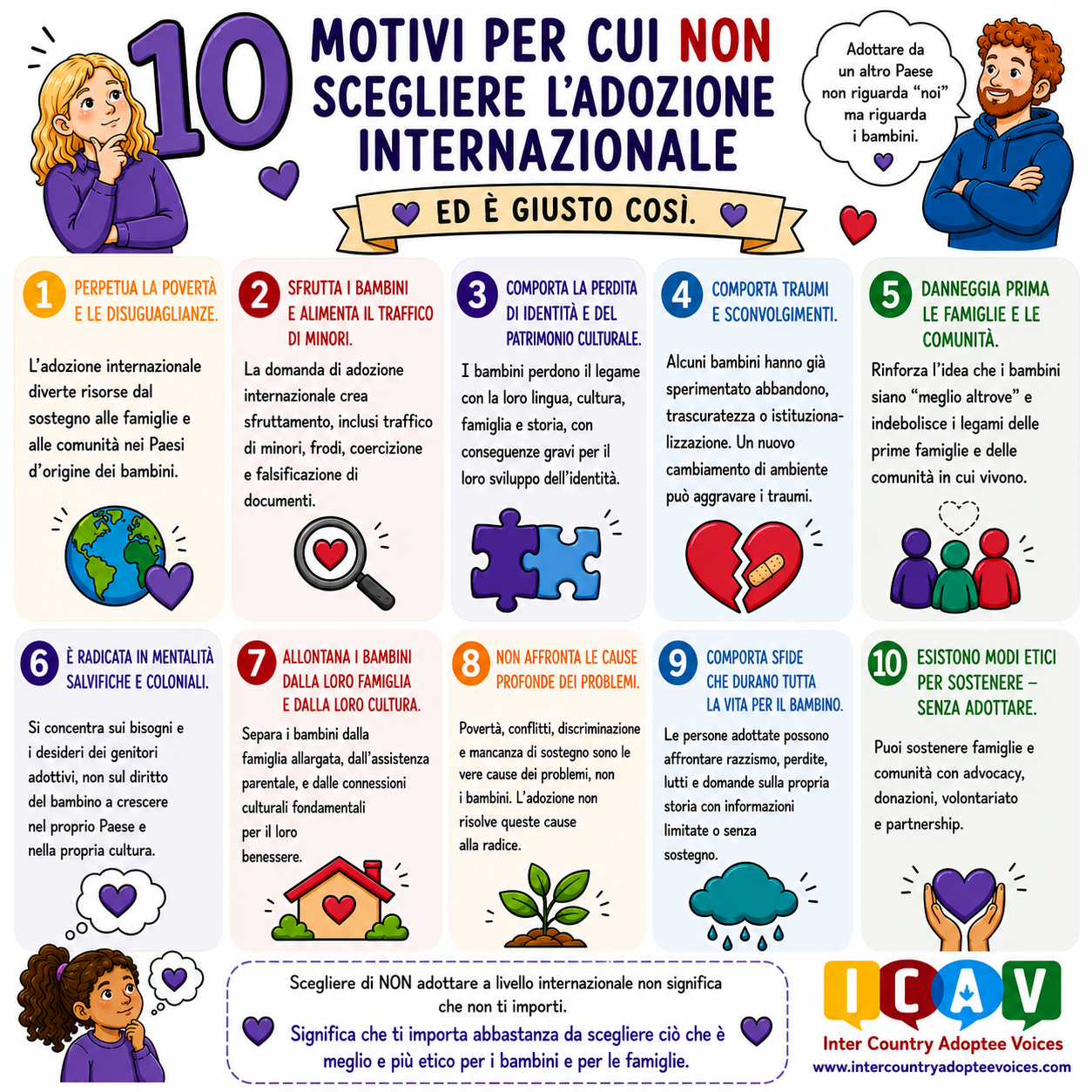
We have translated this resource into seven languages because intercountry adoption is a global practice and this conversation needs to reach beyond English speaking communities. We hope it encourages prospective adoptive parents, professionals, governments and the wider public to question long-held assumptions, listen to lived experience, and place the rights and needs of children and their families at the centre.
Let’s educate the wider community about the harms of intercountry adoption and imagine better ways of supporting children and families without separating them.
Click through the slides to read this in English, French, Spanish, Dutch, Korean, Italian, and German, or click on the language hyperlink to download the file. You are welcome to share on your social media.